
- EN
Introduction: The mesh, water-holding, and gel layers in a dog ice vest each do a different job, and knowing which layer does what makes comparisons far easier.
Two cooling vests can look nearly identical on a hanger and behave completely differently after twenty minutes on a hot sidewalk. The difference usually comes down to which layer does which job: one manages air, one holds water, and one is a cold object that sits against the body. Treating "breathable" as a single property hides all of that. Breaking the vest into three material roles — an airy outer mesh, an absorbent inner layer, and removable freezer gel packs — is the fastest way to tell whether a vest is built to move heat or simply built to look like it does.
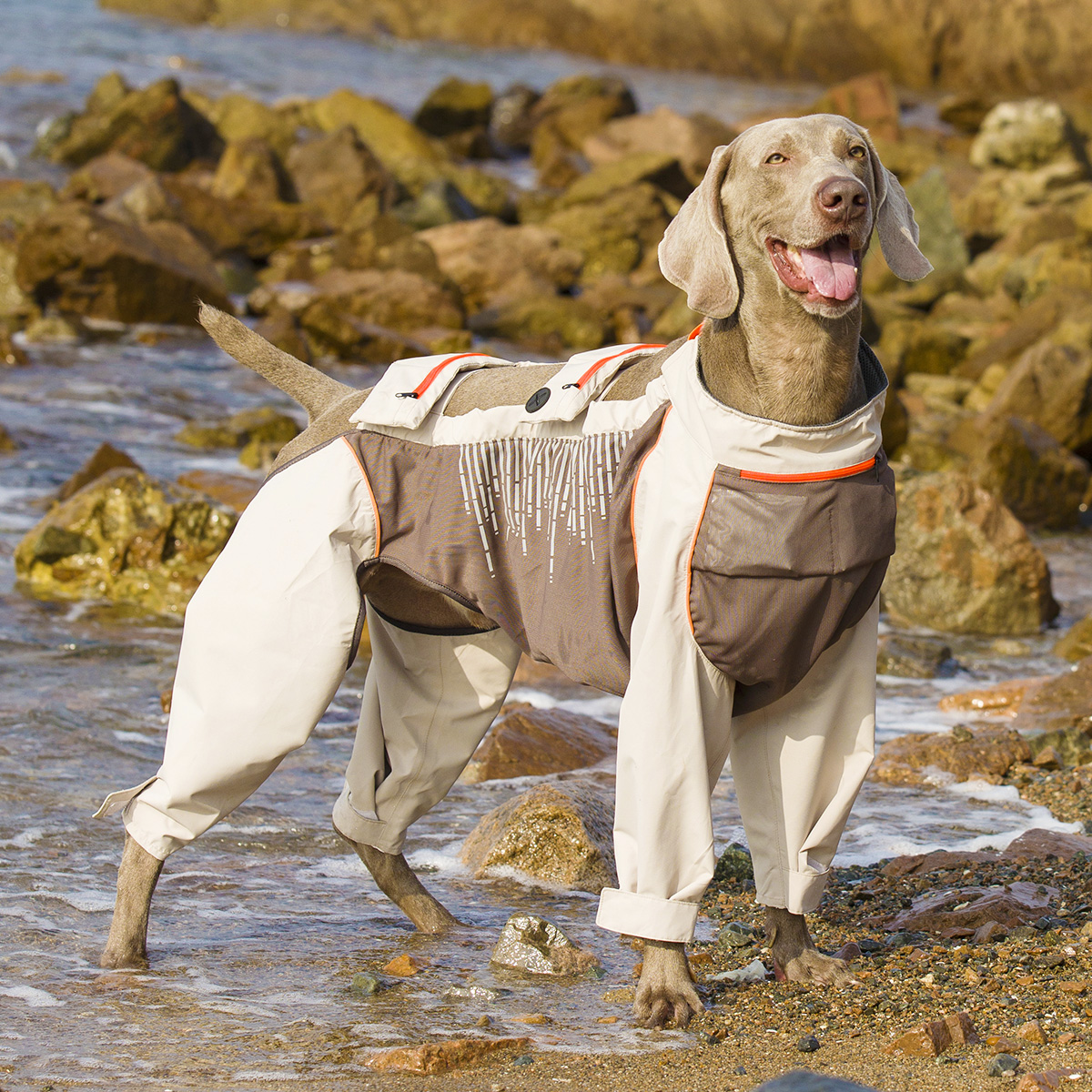
A dog makes heat while walking, and that heat has to go somewhere. Most of it leaves through the skin and through panting, but a vest covers a large part of the torso, so whatever sits on top of the coat decides how easily warm, damp air escapes. An airy mesh outer layer is mostly open space: yarns are knitted into a grid with visible gaps, so air passes through the fabric instead of being blocked by it. On a dog that is actually moving, that openness lets fresh air reach the inner surface and lets humid air drift away. This vest does not carry a published breathability rate, so the open weave itself is the practical signal to look for. Compare that with a solid or coated shell. A tight weave or a waterproof film stops wind and water, which is exactly what you want in a winter coat and exactly what you do not want in August. A closed outer layer traps warm, humid air next to the coat, and the vest starts to feel like a blanket strapped to the ribs. Mesh also takes on a second job on real walks: it is the layer that absorbs abrasion from grass, fences, and harness straps while staying light enough not to add meaningful weight to a dog that is already working to stay cool. When the goal is heat loss, light and open beats thick and padded.
The inner layer is the opposite of the mesh. Where the mesh is open and dry, the inner layer is built to hold water. You soak the vest, wring it out lightly, and the fabric keeps a reservoir of moisture against the dog's torso. That stored water is the fuel for evaporative cooling, and the layer's job is to keep it in place long enough to be useful instead of letting it drip straight through. US textile rules require fiber content to be disclosed on labels, and the exact fiber percentages in this vest are not part of the information currently available, so the layer's function is what is clear here.
When water changes from liquid to vapor it absorbs heat from its surroundings. That is latent heat of vaporization, the same phase-change effect that makes sweating work, and it is the engine behind every evaporative cooling fabric. In a cooling vest, water sitting in the inner layer draws heat out of the fabric and the surrounding air as it turns to vapor. Evaporation is not automatic, though. It needs air movement to carry the vapor away; in still air the layer soon sits under its own humid pocket and the process slows dramatically. That is exactly where the mesh earns its place, letting moving air reach the wet layer and letting the vapor leave.
Air that already holds a lot of water vapor has less room for more, so evaporation slows on muggy days. Dry heat is where an evaporative layer performs at its best, and a sticky afternoon is where it contributes least. Weather services describe the same effect through the heat index, which is why 90°F in dry air and 90°F at high humidity feel so different on the skin. For a dog vest, this means the water-based portion of the cooling carries more of the load on dry days, while the gel packs become the steadier contributor when the air is already saturated with moisture.
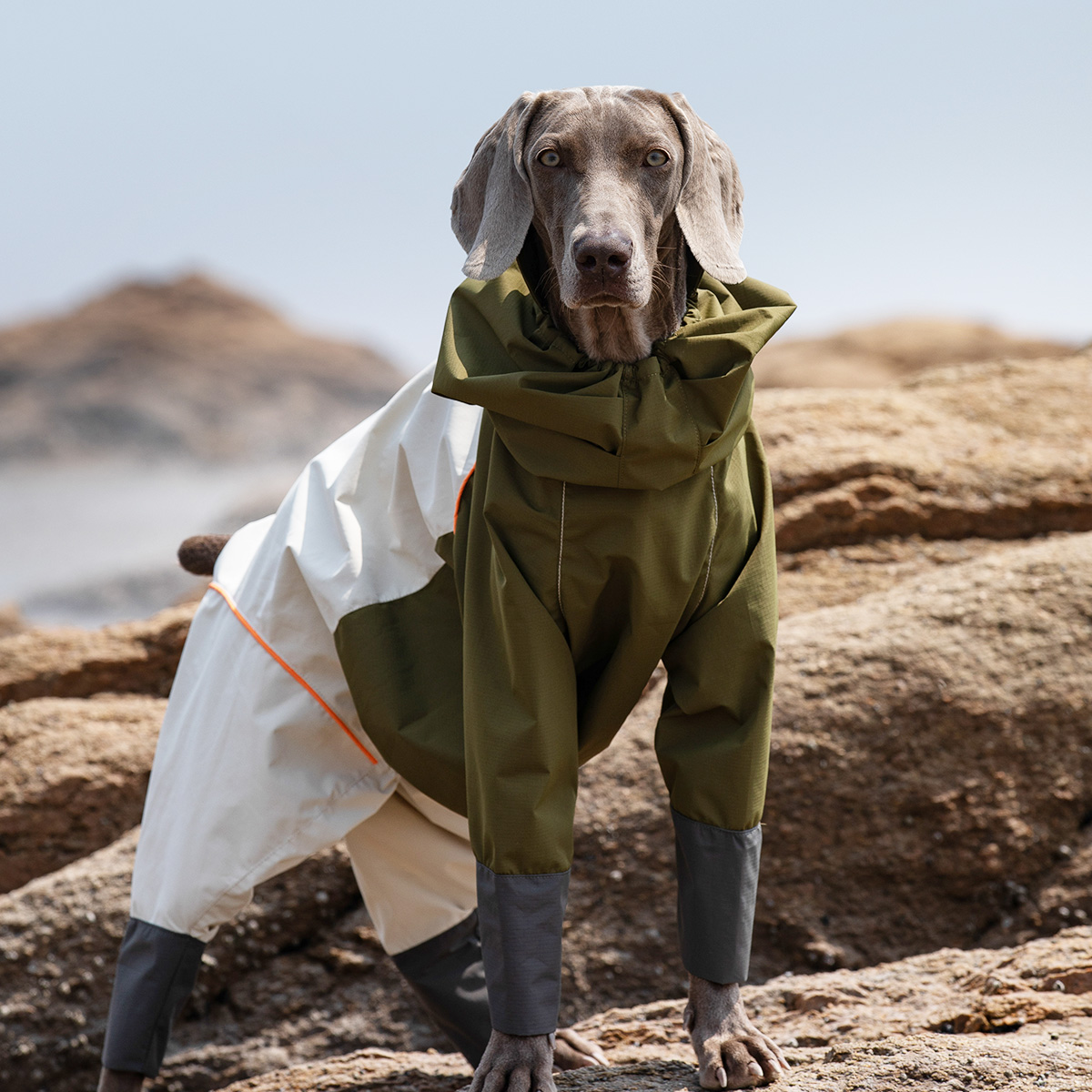
Gel packs do not work by evaporation at all. They are thermal mass: you freeze them, and the cold they store moves into whatever they touch. That is conduction, and conduction needs contact rather than airflow. So the packs sit in their own pockets between the layers, close enough to the torso to pull heat directly through the fabric, but positioned so they are not pressing hard against the chest or ribs. The packs are not fabric either — they are sealed pouches of reusable gel, and they belong in a separate category from the mesh and the absorbent layer because they hold temperature instead of moving air or water. Keeping them removable is what makes the whole garment practical. The vest gets soaked, sandy, and covered in hair, and once the packs come out the fabric can be machine washed and hung to dry. Refreezable packs go back in the freezer and are ready for the next walk, which keeps the cold source reusable rather than disposable. Because contact cooling does not depend on dry air, the packs keep working through the humid afternoons when evaporation is sluggish. Mesh for airflow, absorbent layer for water, gel packs for direct cold: three layers, three separate jobs.
Breathability in a dog ice vest is not one property but three working together. The outer mesh decides how freely air moves across the garment, the absorbent inner layer decides how much water stays in place to evaporate, and the gel packs add cold by direct contact when airflow and evaporation cannot do enough on their own. Reading a vest this way makes comparisons far more useful, because you can immediately see whether a product is built around moving heat or just marketed that way. The layer breakdown is only part of the picture — fit, adjusters, and washing instructions matter just as much — and Trianglewin's cooling vest listing shows how those details are usually presented side by side.
A:It gives air a path through the outermost layer. Warm, humid air near the coat can leave the vest instead of being trapped, and drier air can reach the wet inner layer, which is what keeps evaporation going. Mesh also keeps the garment light and takes the abrasion from grass, straps, and fences.
A:They handle different materials. The mesh is open and manages air movement, while the inner layer is designed to hold water against the torso so it can evaporate and pull heat away. One layer moves air, the other stores moisture, and a vest needs both for evaporative cooling to work.
A:Yes. Evaporation slows when the air is already full of water vapor, so a soaked inner layer releases moisture faster on a dry day than on a sticky one. That is when the removable gel packs matter more, because contact cooling does not depend on dry air to move heat.
Threading Your Way Through the Labeling Requirements Under the Textile and Wool Acts
Custom Logo Wholesale Eco-Friendly Dog Cooling Clothes with Ice Packs


